Immortal AI Investigation
Data Centre Community Impact Hub
Independent research, project tracking and practical tools for communities considering large-scale data-centre developments.
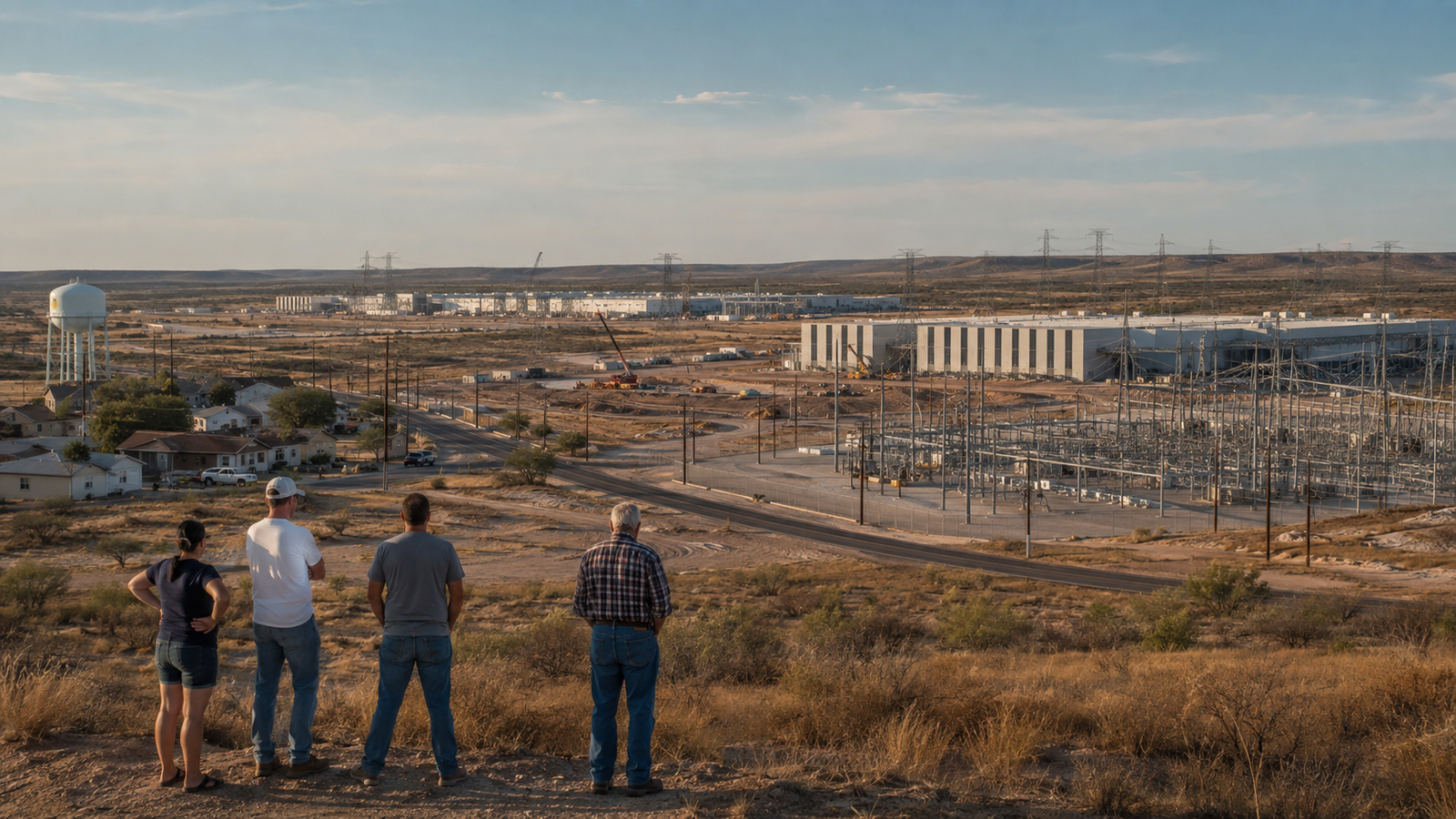
The central question: Are large data centres a net positive or net negative for host communities, who captures the value they create, and do the communities supplying land, electricity, water and infrastructure receive a proportionate share?
Why this hub exists
AI may create enormous economic value. Producing it requires physical systems: land, power stations, transmission, substations, water, roads, finance and long-lived buildings.
The investigation follows those systems from announcement to operation. It separates capital invested from economic benefit retained locally, traces ownership and financing, tests public subsidies and infrastructure obligations, and records what remains unknown.
The United States is the primary focus because it hosts the largest concentration of major data-centre development and much of the current political, regulatory and financial contest.
Provisional policy direction
Accept only under strict, enforceable, project-specific conditions.
This is not a finding that every project is harmful. Active recruitment is justified only where full cost recovery, resource headroom and durable local value capture can be demonstrated.
Findings so far
Three conclusions are becoming hard to ignore
Investment is not local benefit
A billion dollars spent on land, buildings, servers or power equipment does not tell us how much income, tax revenue or lasting value remains in the host community.
Risk is divided
Technology companies often anchor demand and provide leases or guarantees. Funds and lenders finance property. Utilities and governments build or support complementary systems. Communities retain exposure where contracts leave costs unpriced or unsecured.
Promises need contracts
Projected jobs, clean-energy matching, water restoration and future tax receipts matter only when definitions are precise, performance is measured and remedies survive delay, transfer, default and closure.
Follow the money and the risk
A complete project account distinguishes the party paying first from the party carrying the final exposure.
| Actor | Typical role | Value captured | Question for the host |
|---|---|---|---|
| Technology tenant | Creates demand, leases capacity, may contribute assets or guarantees | AI and cloud operating revenue | Are its obligations long enough and strong enough for the assets built around it? |
| Property owner or managed fund | Owns the campus and supplies equity | Rent, asset value and investment return | Who are the ultimate investors and what risk remains with them? |
| Debt investors and banks | Provide or arrange most project debt | Interest, fees and principal repayment | Who ultimately holds the debt and what claims rank ahead of public obligations? |
| Utility | Builds generation, transmission and distribution assets | Regulated revenue and possible asset return | Who pays if demand arrives late, shrinks or disappears? |
| Government | Approves land use and may provide tax, fee, land or road support | Future tax base and development activity | What is the net public cash result after all support and services? |
| Host community | Supplies land, resource headroom, roads and public oversight | Resident wages, local contracts, taxes and direct benefits | Are those benefits additional, proportionate, secured and durable? |
Twelve questions every host should answer
If a material answer is unknown, the default should be to defer the decision rather than convert the gap into a favourable assumption.
- Ownership: Who owns the land, property, data centre, computing equipment, debt and equity, and who ultimately benefits?
- Accountability: Which creditworthy entity can be charged, audited or sued if commitments are not met?
- Electricity: Who pays for generation, transmission, substations, reserves and interconnection, both initially and over the full asset life?
- Exit risk: Do minimum bills, cancellation payments and security protect other ratepayers if load is delayed or reduced?
- Water: What are source-specific annual and peak use, drought performance, wastewater effects and enforceable limits?
- Public balance: What is the 20-year net public cash result after tax concessions, infrastructure, services and maintenance?
- Opportunity cost: What other uses of the land, water and grid capacity are displaced?
- Jobs: How many permanent jobs are required, at what wages, for which employers and how many must be held by local residents?
- Local value: Does procurement measure local value added rather than gross pass-through spending?
- Performance: Do incentives vest only after verified results, with audit rights and clawbacks?
- Lifecycle: Do obligations survive tenant changes, asset transfers, default, closure and decommissioning?
- Uncertainty: Which decision-critical facts remain claims, estimates or unknowns, and can approval lawfully wait?
Community tools
Start a project review in one meeting
These two tools are for council members, community groups, local officials, utility and water representatives, affected landowners and independent advisers assessing a specific data-centre proposal. No specialist qualification is needed to begin. The tools show where expert legal, engineering or financial review is required.
1. Read the PDF first
Purpose: The decision toolkit is the guidance manual. It explains the seven hard gates, the evidence an applicant should provide, how to test public claims and which protections should appear in enforceable agreements.
Use it when: A project is announced, enters planning, requests tax support or seeks new electricity, water, road or other public infrastructure.
2. Use the workbook for one project
Purpose: The assessment workbook is the working project file. It records evidence, public costs and benefits, infrastructure risk, downside scenarios, enforceable commitments and annual performance.
Use it how: Make a fresh copy for each proposed project. Begin on the new START HERE tab. Enter only sourced information and mark everything else UNKNOWN.
Your first 60-minute meeting
- Name the project, location, applicant, technology tenant and current approval stage.
- Open Project Intake and record what has been supplied. Mark unsupported information UNKNOWN.
- Review the seven Hard Gates and identify any issue that could stop or delay the decision.
- Create a priority request list for missing ownership, electricity, water, fiscal and contract documents.
- Assign one person to obtain each document and record its source and date.
- Set the next review date. Do not score or approve the project while a material unknown remains unresolved.
Who should be in the room: a community coordinator; planning and finance representatives; electricity and water representatives; residents, local businesses and affected landowners; and independent legal, engineering or financial reviewers where needed.
Stop rule: A failed or materially unknown hard gate cannot be averaged away by claimed investment, jobs or economic output. Stop and request evidence, or require an enforceable cure.
US project tracker
The tracker begins with transactions that expose how capital, public support and infrastructure risk are structured. It will expand as comparable evidence becomes available.
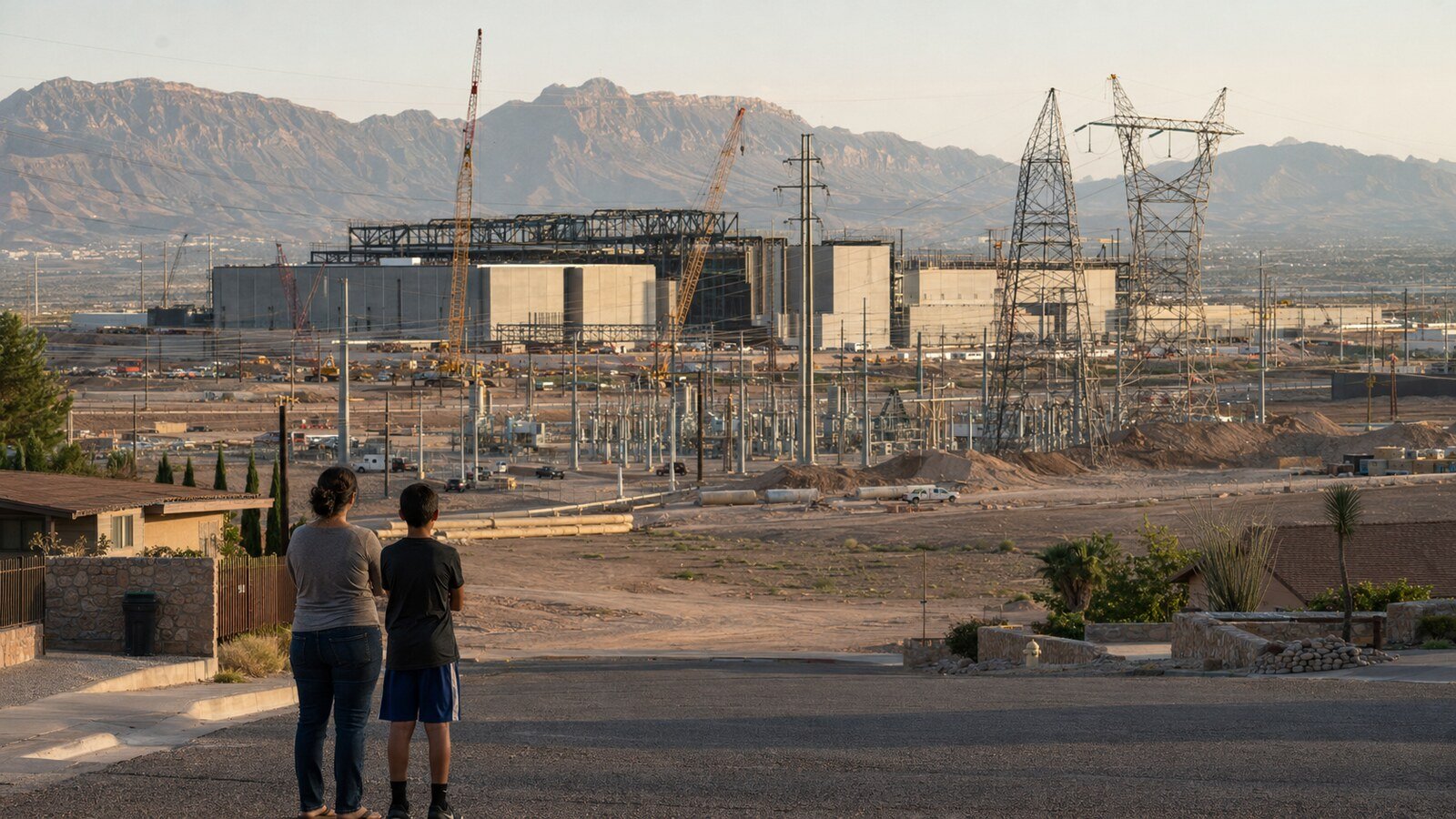
El Paso, Texas
Meta and BlackRock-managed funds
FACT, 2026: Approximately US$14 billion in announced development costs. Venture ownership is 80 percent BlackRock-managed funds and 20 percent Meta, with US$12.5 billion in announced debt financing.
FACT, project agreements: Local support includes layered tax arrangements, fee waivers and potential road reimbursement. The full incentive job threshold is 50 full-time jobs across all phases; Meta projects 300 operating jobs.
UNKNOWN: Final debt holders, full subsidy value, long-term power-cost allocation, actual jobs, local procurement, water performance and decommissioning security.
Richland Parish, Louisiana
Meta Hyperion and Blue Owl-managed funds
FACT, 2025: Approximately US$27 billion in announced development costs. The venture is 80 percent owned by Blue Owl-managed funds and 20 percent by Meta. Meta leases the facilities and provides structured residual-value support.
ESTIMATE / INFERENCE: The Louisiana and Texas transactions show that managed-fund majority ownership, whole-campus leases and debt-financed property are a repeatable option in Meta’s US buildout.
LIMITATION: Two transactions do not establish how every hyperscale project will be financed or where every risk will ultimately sit.
Primary sources for the tracker: Meta and BlackRock transaction announcement, 28 July 2026; City of El Paso Chapter 312 and Chapter 380 project agreements; City of El Paso 2026 draft Data Center Policy Framework; Meta and Blue Owl Hyperion joint-venture announcement, 21 October 2025. Announced development costs measure project scale, not community benefit retained.
Latest data-centre reporting

Data Centre Tax Breaks: How Many Jobs Are Actually Permanent?
Official evaluations often combine temporary construction work, permanent operations roles, contractors and modelled spillovers when describing the employment created by data centres.
AI in Schools: What Parents Should Know About Student Data and Consent
Schools may have authority to introduce some AI systems without an individual parental signature. Families still need a clear account of student data, vendor controls and routes for challenge.
AI’s Buildings Are Private. The Costs Do Not Always Stay That Way.
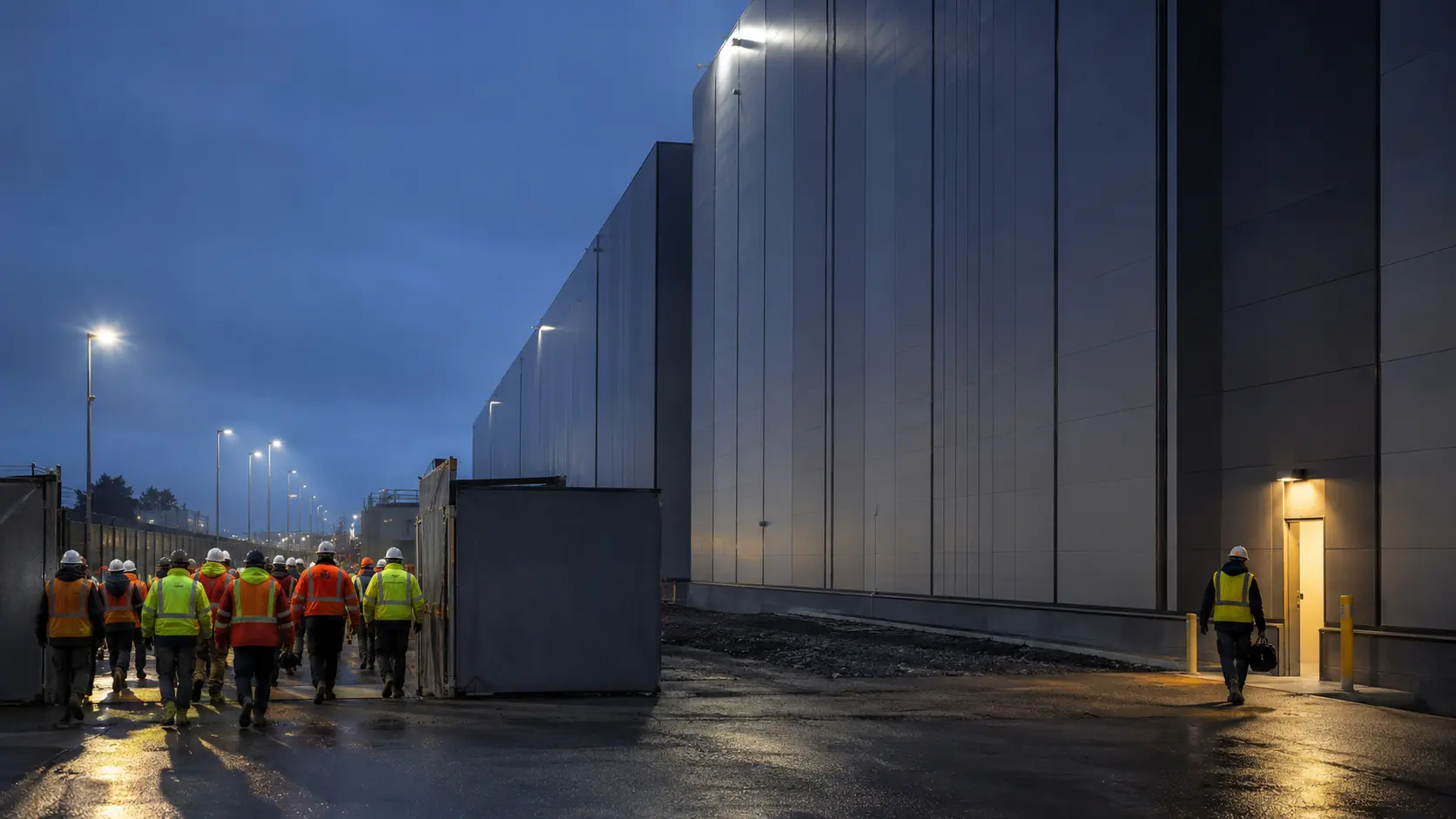
Meta and BlackRock have created a $14 billion venture to build an AI data-centre campus in Texas. The deal shows how private capital is spreading the cost of the AI buildout. It does not answer who ultimately pays for power, water, tax concessions and stranded infrastructure.

How the evidence is handled
FACT
Independently supported by reliable evidence.
ESTIMATE
Calculated or extrapolated with assumptions stated.
CLAIM
An assertion by an interested party that requires verification.
UNKNOWN
Insufficient reliable evidence. Material unknowns are not assumed away.
Last substantive update: 29 July 2026.
Major numerical findings record the figure, year, jurisdiction, source, level of specificity and important limitations. Government, regulatory, utility and water-authority evidence is prioritised. Company, lobby, activist and political statements are not automatically treated as established facts.
Help strengthen the public record
Send project agreements, utility filings, water studies, incentive schedules, ownership records, operating data or corrections. Evidence will be assessed under the same published standard.